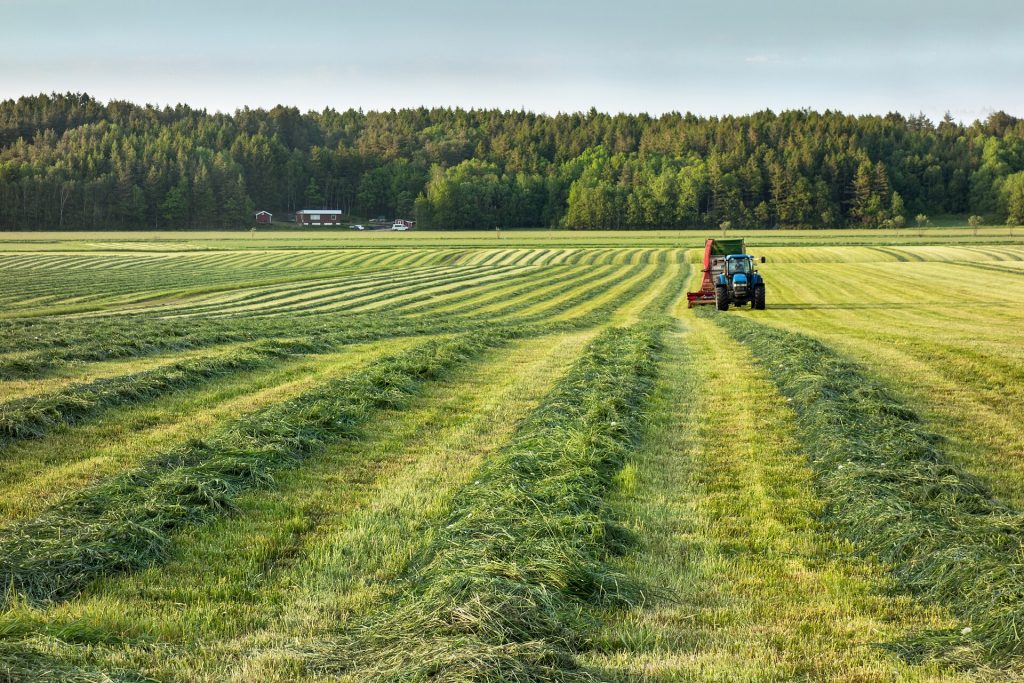
Agriculture is a vital industry to analyse and understand because, from personal experience, and that of many other young people growing up in rural areas in Britain, we think of lush green fields, tractors and of course animals or crops. Agriculture is a backbone to our society. During education, and even during my time in college, we were taught that to live on a farm means hard work but good food and viewed as a somewhat profitable or fulfilling career. However, in my experience from working on a farm, big corporations and the state deliberately hide facts and the real side of agriculture, such as ruthless worker and animal exploitation. During my time on the farm I met a few people who spoke to me about over-stretching hours, working 24 hours without pay and numerous health code violations. Agriculture is necessary for us to grow as a community and as a people. Agriculture is key infrastructure and ultimately affects everyone in Britain but because of the ruling class it has destroyed farm workers and animals by;
- The selling off of family land and allotments to big monopolies such as Dyson and their agriculture businesses Dyson farming [1],
- Relaxing rules and regulations for big corporations and monopolies, allowing workers to get violently sick or suffer injury,
- The gutting of unions on farms and the lack of any support from a union, which causes reluctance amongst workers to unionise and take action,
- Utilising dodgy contracts or zero hour contracts and not increasing pay with inflation and exploiting the lack of organisational knowledge [2],
- Degradation of the land and pollution caused by careless use of pesticide and herbicides which destroy rivers and ecosystems [6],
- And the exploitation of animals by cross breeding and the commercialisation of the farm animals, a key result of uncontrolled capitalist growth. [8]
As young communists we should be keen to study how the means of production developed, in general and in agriculture, because basic knowledge in agriculture can be a collective tool to benefit local communities and people who struggle to get food for themselves. Many revolutionaries such as chairman Mao Zedong realised the importance of the proletariat seizing the means of production of food/agricultural products.
So you may ask how has this really impacted workers and their ability to organise? Well firstly, during education we don’t cover unions much, if at all, and we are not encouraged to join a farmers union. For most young people who work on farms, and in general, they feel like it is pointless to try to organise together with other workers to fight against certain conditions, for example working 24 hours without overtime pay. The dismantling of unions and the excessive bureaucracy (from moving union presence away from farms and into offices) has made work on farms incredibly dangerous. This is because of the removal of union oversight and the lack of any sort of union presence on farms and in the agricultural sector along with a lack of accountability for workers who get sick. Health regulations get cut in order to increase profits. If a worker speaks out or falls out of line they risk facing the farmers union, which has been weaponised to serve farm owners, agricultural production corporations and pesticide and herbicide companies. In the agricultural sector there have been recent actions by the government to completely halt farm inspections even though before this, fewer than 3% of farms were inspected per year by health authorities [7]. The relaxing of rules and regulations in the sector is linked to the relaxing of health and safety across all industries in favour of cutting prices and increasing the profit. Reasons like this are paramount to why we must unionise and work to seek positions where we can benefit the workers; for agricultural workers, unions like Unite can be tools against corporate greed.
Furthermore, in 2024 the Health and Safety Executive (HSE) made the very controversial decision to stop proactive safety inspections on farms completely. This has fundamentally increased the mortality rate on farms and in the sector overall and it has indirectly benefitted wealthy landowners and farmers because they can cut corners without the HSE doing proactive inspections. We must analyse the current situation as to why these actions have been taken by the HSE: the HSE claims resource constraints and government down regulation, “The TUC argued strongly that the move away from proactive inspections was a political move and not one based on evidence.” [5]
How can we fight this as young communists then? We have to analyse why rules and regulations have been relaxed in favour of the corporations. We also have to come up with a concrete strategy to make other colleagues on farms and in general aware of the implications of relaxing many rules and regulations in favour of increasing profits. In agriculture there is a lack of dedicated trade unions that work to benefit the employees of various farms and agricultural areas. During my education we only briefly covered the NFU, which represents farm owners and wealthy landowners instead of workers. The lack of trade unions has made agriculture a very dangerous sector, with disease being a common thing, the excessive use of harsh chemicals like sodium hydroxide(lime), the lack of management of manure and waste. One of the actions we can take is collective action against wealthy farm owners, strikes can be a tool used against greedy corporate entities and bosses who push their employees around, another action we can take is to collectively voice our opinions and our issues to management or to directly report issues to the HSE. [3]
Agriculture is also known as one of the most dangerous sector to work in, with 22 people killed in 2025/2026.
Also in 2025/2026 only 2,000 – 2,395 farms were inspected in the UK out of 212,000 farms [4]
We must demand that health and safety on farms and in all sectors must be vigorous and to stay up to date with new threats such as disease or shocks from the global market system.
As young determined socialists, communists and workers we should constantly fight to improve our visibility in our unions and we must fight for the rights of the workers on farms as well as all other industries, so what can be done about this? As workers on farms and in general, we must get involved in trade unions and have to collectively voice our opinions when we see injustice; when workers are united we can fight inequality together. As communists, another action we can take is to demand that more protections are put forward for agricultural workers, we can demand that more health and safety regulations are put forward especially in cases of waste management and food management of livestock, we must demand that bosses and corporate entities take appropriate action when workers are faced with injustice and unhealthy working conditions. We should also call on the government to hold public inquiries into pesticide companies such as Monsanto for their product Roundup for increasing likelihood of non-Hodgkin lymphoma. [9]
Drew Morse, is a member of the YCL’s Cymru Branch
[1] https://todaysconveyancer.co.uk/number-farms-england-drops-14-6-landowners-face-changing-routes-market/) (https://thenextweb.com/news/dyson-farming-vacuum-strawberry-robots-land
[3] https://www.hse.gov.uk/statistics/fatals-overview.htm
[5] https://www.tuc.org.uk/blogs/does-review-signal-change-direction-hse
[8] https://www.bhwt.org.uk/blog/news/plan-to-ban-cages-for-laying-hens-by-2032/