I was fortunate to join the 53rd José Martí European Brigade, made up of 112 people, organised by the Cuban Institute of Friendship with the Peoples (ICAP) to visit Cuba in August 2026, which also saw us partake in events to celebrate the centenary and legacy of Commander-in-Chief, Fidel Castro Ruz. This was my second visit to Cuba, having visited four years earlier as part of the Cuba Solidarity Campaign Young Workers Trade Union Delegation for May Day 2022. Cuba has had to navigate through the US blockade and additional sanction imposed, particularly since the oil embargo at the start of the year which has seen many years of discussion on economic changes come into force, with the hope this will ease some of the pressures felt by the blockade.
Before I even got to the island the additional sanctions made the trip more difficult. Visa and Mastercard no longer work so you had to make sure you had enough cash for your whole trip. Many airlines have also pulled their flights because of secondary sanctions so long layovers between connecting flights are to be expected. This is all by design to deter people from going to Cuba and instead picking somewhere else. This is at a time when Cuba needs support and tourism now more than ever.
Our stay started in Havana. The streets felt quieter and the effects of the tightened blockade had no place to hide, with dark streets due to a blackout and rubbish piled in spots around the city due to fuel shortages meaning that refuse trucks couldn’t do their usual runs. There were more places closed, likely because they couldn’t get the products they needed, or the US secondary sanctions has put fear into businesses and countries who dare to trade or operate in Cuba. However, the most noticeable difference in Cuba were the people. It’s difficult to describe what exactly felt different from last time, but the best way to describe it would be a sense of fatigue, that the blockade is taking its toll on people and everything has to be thought through which we take for granted. Taking a shower whenever or charging your phone when it’s on 3% became planned activities to be done at certain times of the day. For part of our visit, we stayed at the Julio Antonio Mella International Camp (CIJAM) where the showers only worked in the evenings, and we’d experience power cuts during our stay leaving us eating in the dark some evenings. We only had to endure this for a few days whereas this has become a daily occurrence for Cubans. We were told of one village near the camp were in their third week of having electricity for 1-2 hours a day.
We also visited Santa Clara, which had a different feel to Havana in terms of the impacts of the blockade. Around 250,000 people live in Santa Clara compared to 2 million in Havana so this naturally means there is more space and less rubbish to be piled in the streets. However, the impacts of the blockade were still noticeable with multiple power cuts throughout our stay.
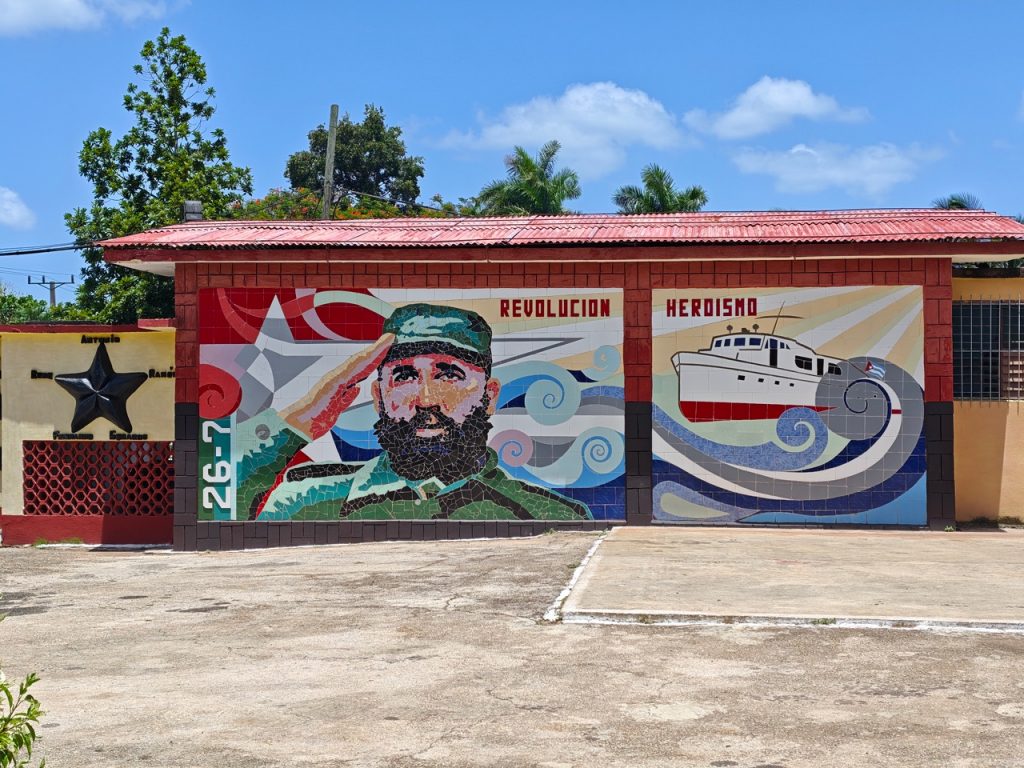
The US added additional sanctions on Cuba in January 2026, and more in recent months, as well as placing secondary sanctions on countries who sent oil to Cuba. As a result, only one shipment of oil made it to Cuba from Russia. Many ships are stopped by the US before they can make it to Cuba and hundreds of containers are held up in neighbouring countries.
One of Cuba’s recent success stories was creating five Covid vaccines, which they shared with many countries across the world to protect people, not profit. However, this came out of necessity because the US blockade cut off Cuba from accessing vaccines we had in the west. Due to the lack of oil – and thus electricity – operations are being cancelled, cancer patients are not able to get treatment they require and one of the most shocking consequences is health professionals having to try and keep babies alive with manual pump ventilators when it can and should be done by machines. This has seen infant mortality rates more than double in Cuba as a direct result of the illegal US blockade.
The Cuban Government and Cuban Communist Party (PCC) has been discussing reforms to the economy for the last 10 years, closely analysing and reviewing how China and Vietnam have used the markets in socialist states, with the aim of easing the impacts of the blockade. Cuban President, Miguel Díaz-Canel, announced the 176 new reforms that passed unanimously in June 2026, and has been clear that Cuba will decide its own path.
The Cuban Government recognise you have to take the masses with you, so one challenge and action they are taking is ensuring that the facts are getting out there to the people about why the situation is getting worse and the reasons for it. The Cubans I spoke to were well aware of the culprit for their living conditions is the US illegal blockade.
But the Cuban Government doesn’t stop there, they are putting tangible actions in place. They realise they can’t fix everything right away, so they prioritise where resources go. One example is that Cuba has their own oil but it’s too thick to use. However, given the situation they have revisited this and are currently looking at ways they can refine the oil to make it usable, to give them the ability to use their own resources and ease some pressure of the blockade. Whilst this has the potential to help ease the situation in the short-term, they are placing a great emphasis on renewable energies such as solar power because, after all, you can’t blockade the sun. We saw lots of solar panels on buildings being utilised and we also passed a solar park when travelling around Santa Clara. China is providing great support with building the solar parks to help accelerate their transition to become less reliant on oil and give Cuba sovereignty over their energy.
As part of our delegation visit, we did some solidarity work by supporting the farms: helping them plant more crops by pulling out overgrown weeds. Whilst it may be a small symbolic action to demonstrate our solidarity with the Cuban workers, we were informed that with our 100+ delegation, it meant they could now grow more food and crops than before because they didn’t have the capacity to clear out some of the areas we tackled. This is another area that the PCC is currently looking at to produce their own food to become more self-reliant. Around 80% of the population live in cities, so they are reviewing this to create conditions to support people to return back to the rural areas.
The most significant recent change is the opening up of the economy to the private sector but this is being done in a controlled way with oversight from the Cuban Government. These reforms are misunderstood – in some cases intentionally – to vilify Cuba, that they are abandoning their socialist project and deviating towards capitalism. They fail to understand the class character of the Cuban state or the material conditions that they are in as a result of the US blockade. With opening up of the markets, the people will still rule over capital, rather than capital ruling over the people. Secondly, the US blockade is crippling the Cuban economy, so they need to look at alternatives to alleviate the situation and have used the successful experiences elsewhere to apply to their conditions.
We visited a private tech company who are looking at creating and improving communications across the country. 50% of any income goes to the state in tax. The other 50% has to cover the running costs of the business, wages etc. Any surplus can either be reinvested back into the business or paid out to workers. This creates opportunities for the workers to earn more than if they worked in the public sector, but these businesses are doing two things. Firstly, they generate revenue for the state to then be able to buy essentials for the people, but also provides new pathways for materials to come into the country whereas they wouldn’t trade with the Cuban Government directly.
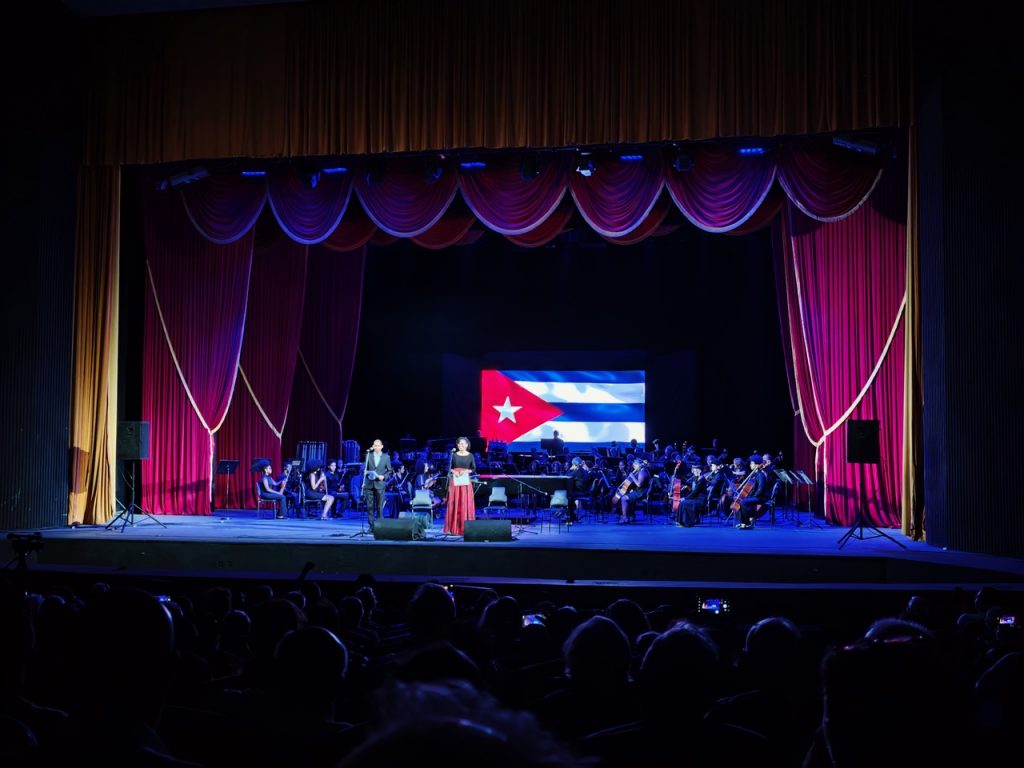
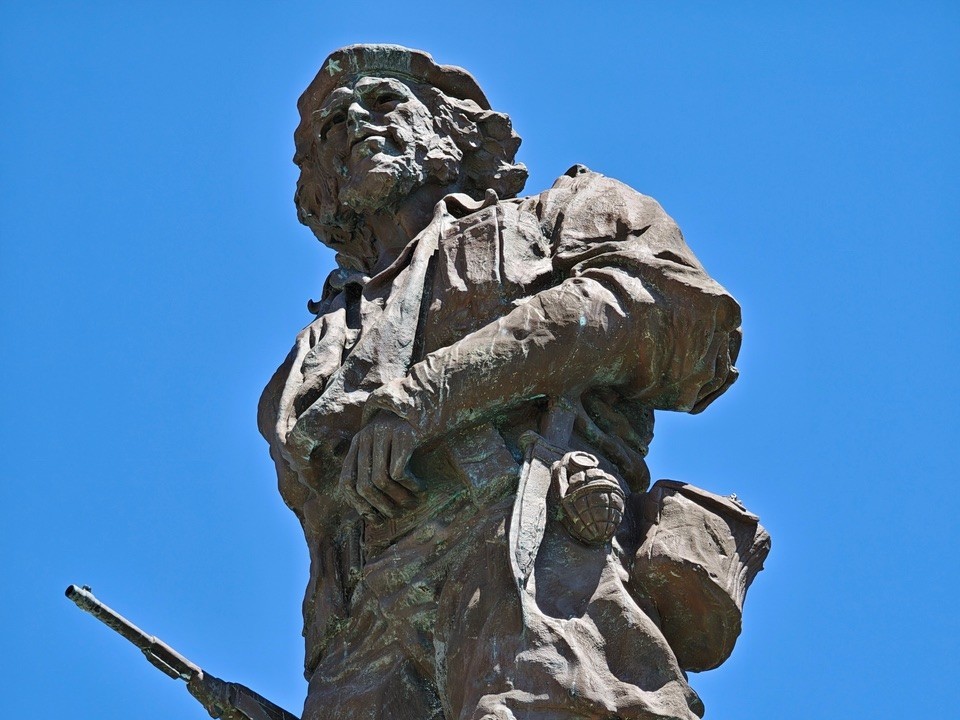
To be in Cuba to celebrate the centenary for Fidel Castro’s birth was a privilege. The celebrations were not about remembering Fidel as a piece of history, but that his legacy and ideas continue to live on through Cuba and international movement. We attended performances which included the young pioneers which is something Fidel placed an importance on, the youth being the future. There were a number of meetings and sessions where we heard from Cuban officials from a range of organisations. One consistent theme was of Cuba’s solidarity with Palestine. Even as Cuba faces its own genocidal blockade, their international solidarity continues and in more than just words. They have trained 100’s of Palestinians doctors for free in medical schools in Havana. To quote Fidel “Internationalism is paying our debt to humanity.” Throughout the celebrations there was so much international solidarity with Cuba from across the globe. Many stories shared how Cuba personally helped their country by sending doctors, or vaccines in the interest of the people.
The Unión de Jóvenes Comunistas (UJC, or Young Communist League) is the official youth wing of the Communist Party of Cuba, and are playing an important role of keeping the revolutionary spirit of the Cuban revolution alive amongst young people. The UJC face a new challenge that for many young people, the revolution was an event in history so are more detached than their parents or grandparents and have only known a life under a blockade. Some youths are wanting to leave because life under the blockade is very difficult and depriving them of a normal childhood. The delegation brought over many toys, but also pens and notebooks for schools which they struggle to get because of the blockade. Further demonstrating that the US blockade reaches and impacts every part of society. The UJC explained they embed themselves in the communities with issues affecting the youth such as teenage pregnancy and providing assistance and guidance. Where opportunities allow, then using this to show the links with the US blockade and also what it means to be Cuban and not lose the revolutionary ideas or spirits, and try to attract the youth in everything they do.
It’s our duty to defend socialist Cuba and ensure the facts are being shared about the situation, not letting the media distort the truth. This US blockade is not a policy of Trump but of US imperialism. Cuba’s suffering doesn’t end when Trump leaves office so our solidarity won’t end either. The US decisions to impose sanctions and stop countries trading with Cuba is taking away our sovereignty as a country to decide whether we want to have relations with Cuba. We must fight for an end to the US blockade and Cuba to be fully sovereign, which would also give sovereignty back to Britain over our foreign policy.
We can do this by joining the Cuba Solidarity Campaign (CSC), being active in the local branches and ensuring we are doing tangible actions such as fundraising for the Cuba Vive campaign to send vital aid to Cuba, but using these events to spread awareness of the situation Cubans are facing. Get your trade union branches to affiliate to CSC as well and commit your union to campaign for an end to the blockade. We should use every tool at our disposal which includes writing to politicians to publicly declare they oppose the US blockade and reclaim our sovereignty over foreign policy.
Cuba has a proud history of internationalism sending doctors, not bombs, and as communists it’s our duty to be internationalists too. As Miguel Diaz-Canal summed up “Solidarity is a weapon we have against injustice”.
Twm Draper, is a member of the YCL’s Central Committee