In discussion with the Central Committee, it was noted that there is a tendency among YCL branches to downplay their achievements and overstate their difficulties. We believe that this is due – at least in part – to short-termism. By this we mean becoming despondent when the immediate results are not visible. As young communists this is not surprising as the ability to take a long term and historical view comes with age, however there are still things we can do to gain a greater sense of perspective.
Revolutionary Optimism
Revolutionary optimism is the resolute belief that working people must inevitably win in the fight against capitalism. It is not blind faith. It is not hoping for the best or acting without thinking and expecting everything will work out. It lies in the knowledge of dialectics: that things are constantly changing, new ideas and forces are always developing and replacing the old. It lies in the knowledge that Marx’s analyses show that capitalism is inherently contradictory and must fall. It lies in the knowledge that others have already shown the way. The greatest examples of these are the victories of socialism across the world, from the Soviet Union, through to anti-imperialist revolutions across Asia, Africa, and Latin America, to the socialist states that exist today. These examples show us that a new, better world is possible and tell us what we need to do to achieve it.
Revolutionary optimism does not mean we just put our feet up and wait for socialism to happen: it means that we are confident that our theory and practice will guide us in the right direction. It does not mean that we only look at the bright side and never analyse our failures: after all, criticism and self-criticism are an essential aspect of refining our theory and practice. We will make mistakes, as young communists this is inevitable and perhaps it is the point of having an independent youth league: to allow us to make the mistakes we need to make to grow and develop as communists.
This does not mean that we will always move forward, as mistakes can lead to losses and retreat, and in adverse circumstances even the correct actions may not be enough. It means that if we keep true to our methods, that we will succeed, we must succeed.
Phil Piratin
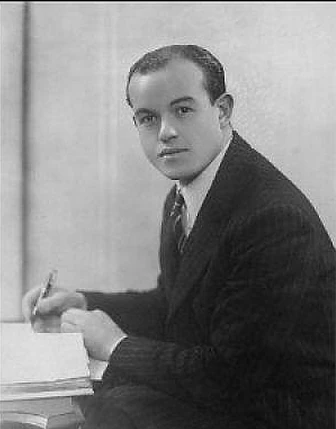
As inspiring as stories of Lenin and Mao can be, they can also sometimes feel somewhat alien and less applicable to our times. In this case we should look closer to home and I believe the case study for revolutionary optimism in Britain must be the story of Phil Piratin. His memoir Our Flag Stays Red details his journey from birth, to being elected a Communist MP for Mile End in London. It was once said to me that Our Flag Stays Red should be mandatory reading for all new Party and League members, and after reading it I completely agree.
Piratin joined the party in 1934 aged 27 in Stepney. In the same year there were local elections in London where Labour won all three sets in Stepney. By 1937 the Communists had managed to win one council seat. In 1945 Piratin was elected to Parliament as the Communist MP for the constituency of Mile End. In this time the Stepney branch got things right and wrong, they did work in housing, in anti-fascism, and led the local people through the Second World War. Piratin himself talks about mistakes the branch made such as taking an unscientific view of elections and solving problems for tenants in a tower block rather than empowering them to help themselves.
He describes ‘the basic, solid, slogging work of exposing fascism to its own supporters’. Almost certainly there would have been times when these comrades felt dejected by their failures or frustrated that they were not seeing the results of their work, but they continued, nonetheless. This is the essence of revolutionary optimism. In the book, Piratin describes the ordinary working people who were brought into the class struggle by the party, men and women living in slums who saw what the Party had to offer and were empowered by people like Piratin to take up arms in a sea of trouble.
Piratin was not a superhuman figure. He was a man who understood the power of Marxism-Leninism, who understood the power of the communist party and collective action, who understood the need to analyse and criticise past action to guide future action, who did not give up. We cannot all be Marx or Lenin or Mao, but we can all be Phil Piratin. If we all followed his example, the Party and League would be much stronger for it.
Let me finish with a salient quote from Harry Pollitt:
‘No matter how small and unimportant what we are doing may seem, if we do it well, it may soon become the step that will lead us to better things’.
Siddharth Pandey, is a member of the YCL’s Central Committee