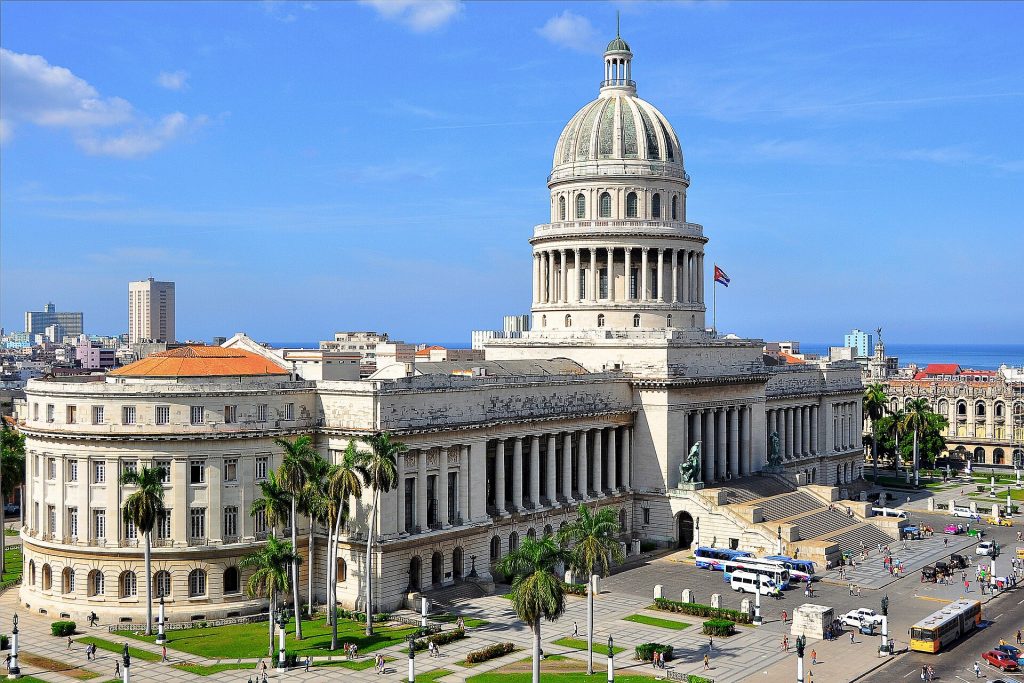
Cuba sits at a crucial juncture in its history. For the last 67 years, the small Caribbean island 90 miles from the coast of Florida has endured an economic blockade and system of sanctions designed to, in the words of the US state department: “make the greatest inroads in denying money and supplies to Cuba, to decrease monetary and real wages, to bring about hunger, desperation and overthrow of government”. The Trump administration, with encouragement from the deeply reactionary Cuban exile movement in Miami, has intensified these attacks in recent months. Most notably, extra sanctions in 2026 have made it almost impossible for Cuba to import oil. As a result, the country has been facing regular blackouts and a significant drop in tourism. All the while, the US state manufactures consent for military action under the pretence that Cuba is a threat to its interests. The response of the Cuban state and its people over the coming weeks and months may determine the long-term future of the socialist project.
It is natural to question how much more the Cuban people can take. One might naïvely think that the pressures of daily life under a brutal blockade would impact the sense of loyalty that the population feel towards the socialist revolution. Half a million people on the streets of Havana for International Workers Day would say otherwise.
I and 10 other young British trade unionists recently returned from Cuba, on a trip organised by the Cuba Solidarity Campaign as part of the International May Day Brigade. Over the course of a 12 day trip, we were consistently met with the same message from differing sections of Cuban society. During visits to medical centres, schools, agricultural cooperatives and dry docks the workers and students maintained attitudes of defiance against the blockade, unwavering loyalty to the revolution and a firm commitment to uphold the nature of the socialist system. Those we spoke to knew that a state under the direct control of the Communist Party of Cuba (PCC), a party whose cadres constitute almost 1/10th of the population of the island, would always have put the interests of the Cuban people at the forefront of all of its activity. There was simply no desire amongst the vast majority of Cubans with whom we interacted to bow to the whims of the US.
This is not to say that people in Cuba are not suffering as a result of the blockade, Foreign Minister Bruno Rodríguez Parrilla noted at the International Solidarity Conference on 2nd May that “we (the PCC) know that the Cuban people have had to adapt to these changing conditions”. Still, it is clear from conversations with Cubans that many are willing to fight until their last breath for the defence of the revolution. President Díaz-Canel summed up the deep sense of patriotism well when, in response to escalating threats of military action by the US, he said:
“Do you know why they (Cubans) are not afraid? Because when one is prepared to give one’s life for a just cause – which in this case means being prepared to give one’s life for our revolution, being prepared to fight to the bitter end for our revolution – and when there are so many of us in this country who are prepared to do that, there can be no fear. You made the decision of your life to the very end, and the fear is gone.”
This is not an abstract patriotism, it is one rooted in the history of struggle of Cuba against imperial and colonial powers and the achievements of the socialist project. It is a patriotism whose core principles are summed up well in the national motto of Cuba: “Patria o muerte, venceremos.” (Homeland or death, we will win). This motto reverberates through workplaces, schools and solidarity meetings and reinforces the unflinching nature of the Cuban people in the face of naked threats from the US.
Communists and trade unionists in Britain have a vital role to play in publicising and defending the Cuban project from within the imperial heartlands. Supporting the work of the Cuba Solidarity Campaign through its Cuba Vive appeal to send medical aid to Cuba and by affiliating your trade union branches should be a priority for all workers and students who stand in solidarity with Cuba. In this struggle the youth must play a leading role; when our youth fight for dignity and self-determination for Cuba, this can only increase the possibility for the youth in Cuba to inherit the gains of the revolution which their parents and grandparents fought for without flinching.
To paraphrase the immortal words of Fidel Castro: condemn Cuba. It does not matter. History will absolve them.
Jack Davidson, is one of the YCL’s Industrial Officers