[First delivered by Orla MacKenzie at the July 2026 meeting of the YCL Central Committee meeting, 4th-5th July, with additions from the subsequent discussion]
After 6 long years of tyranny over the Labour party, the man lovingly known as ‘Keir Stalin’ has stepped down as prime minister. Leaving in his wake a resigned defence secretary, and a £15bn boost to military spending.
As hopefuls cling to Andy Burnham as the saviour of Britain (a man who will do anything to avoid commuting beyond Manchester). I can’t help but feel I am watching history repeat itself.
As thousands had flocked to the now forgotten Your Party, the once heralded alternative to establishment politics.
Far from offering an alternative, Burnham has already committed to following the same fiscal rules as his predecessor. In his speech on what his premiership would look like, he seemingly aimed to give each section of the Labour Party just enough that they wouldn’t challenge him: for the left, to represent each section of party in leadership, and not to use whips the way they have been used lately, and for the right, to use approaches such as public-private partnership, etc.
While much has been made about his devolution proposals, these may actually just wash the government’s hands of its responsibilities – for example, “we can’t renationalise water as it’s up to the municipalities/counties/regions, not us”.
Burnham made no mention of international policy, and on defence merely about giving contracts to British arms dealers. At a time when extreme heat is ravaging Britain and the world, the importance of investing in good green jobs (and other socially useful sectors), not militarism, is paramount. So it was disappointing to see some unions, such as the GMB and Unite, trying to block Ed Miliband from becoming Chancellor on the basis that they have members in fossil fuel industries. As communists we see this for what it is: pure economism and short-termism, and the lack of a real political outlook.
Recent elections in Scotland and Wales have made it all but clear, support for political parties is swinging. From Conservatives, to Labour, to the Greens and Reform. With each election voters move from one to the other, hoping something will stick.
This political blackhole has become prime real estate for figures such as Nigel ‘Up the RA’ Farage, who has taken every opportunity to cash in on Britain’s political instability. Whether that be by shilling gold bouillons or accepting a very generous (undeclared) £5m gift from crypto billionaire, Christopher Harbone.
This constant merry-go-round exposes the true futility of parliament politics. Real change for the working class can never take place in a state upheld by bribery, media conglomerates, and ruling class interest.
It only leaves space for the extremes of the political spectrum to swoop in. Redirecting the enemy from the very people benefitting from our economic dysfunction to the media’s favourite ghouls: immigrants and migrants.
It is all too easy for liberal leftists to dismiss these views as racist, xenophobic, and bigoted. Instead of addressing the very real anger underlying them. With the cost of greed crisis still trundling on, leaving families struggling and foodbanks flagging.
Alongside a recent independent enquiry finding that white working-class children are falling behind, serving as the lowest-performing demographic in English schools.
We saw in recent riots that those participating were mainly young people – a generation of people left to rot with no job/housing prospects, costs going up. It is unsurprising they get swept up by loyalist communities. Reports that some were being groomed or forced into participating in pogroms to clear the likes of drug debts is particularly concerning.
The working class of this country has been failed. Pushing back without an alternative only feeds into the persecution mindset Reform is selling: that questioning of the system is no longer allowed, in favour of multiculturalism and mass migration.
As Marxist-Leninists we know that class is not just another link in the intersectional chain. Identity politics, regardless of which side, is shallow. Seeking only to fragment the unbridled power of workers united.
Whilst the above situation is catastrophic, we must not hesitate to fight against the rise of the right in our communities. By becoming active in local campaigns delivering measurable wins and connecting with our neighbours on collective issues.
In our workplaces, schools, or local area. It is time to give communism a human face.
International Updates
The YCL CC are disappointed to see the victory of right-wing candidate Keiko Fujimori in the recent Peruvian Presidential elections.
We note the varied responses across the left to Cuba’s recent package of sweeping economic reforms. Some of the misunderstandings voiced around these reforms are reminiscent of the same perspectives given on China’s previous reforms. Despite giving greater autonomy to state owned enterprises, municipalities, private individuals and enterprises, these reforms do not give up social ownership. For example, only the usage rights to state-owned land can only be given to individuals and enterprises, and only for useful purposes. The state retains their ownership rights and can thus take the land back to give to others should it not be taken for such useful purposes.
The reforms intended to make the import of green energy and electric vehicle technology easier are particularly promising – China has already been facilitating solar power development in Cuba, and these measures will reduce the barriers further. It is left to be seen how effectively these measures, especially around finance, will be able to circumvent the USA’s blockade, but it is clear the Cuban revolution is continuing to adapt to survive. Continued efforts to provide material aid to Cuba, and heighten pressure on our own government to stand up to the USA, are essential across our unions, campuses, and other organisations such as the Cuba Solidarity Campaign.
With recent skirmishes in Somalia, we highlight the role of British imperialism in creating the conditions which have led to troubles in the region, including the very basis of the breakaway Somaliland being the fact it was previously the separate “British Somaliland”.
We note how the new Hungarian government has doubled-down on pushing Russia’s red lines, further heightening tensions in the region.
We were disappointed to see that on a recent visit to Haiti, the UN Secretary General mentioned nothing of state brutality, only criminal gangs – essentially legitimising the one person dictatorship of their US-backed prime minister.
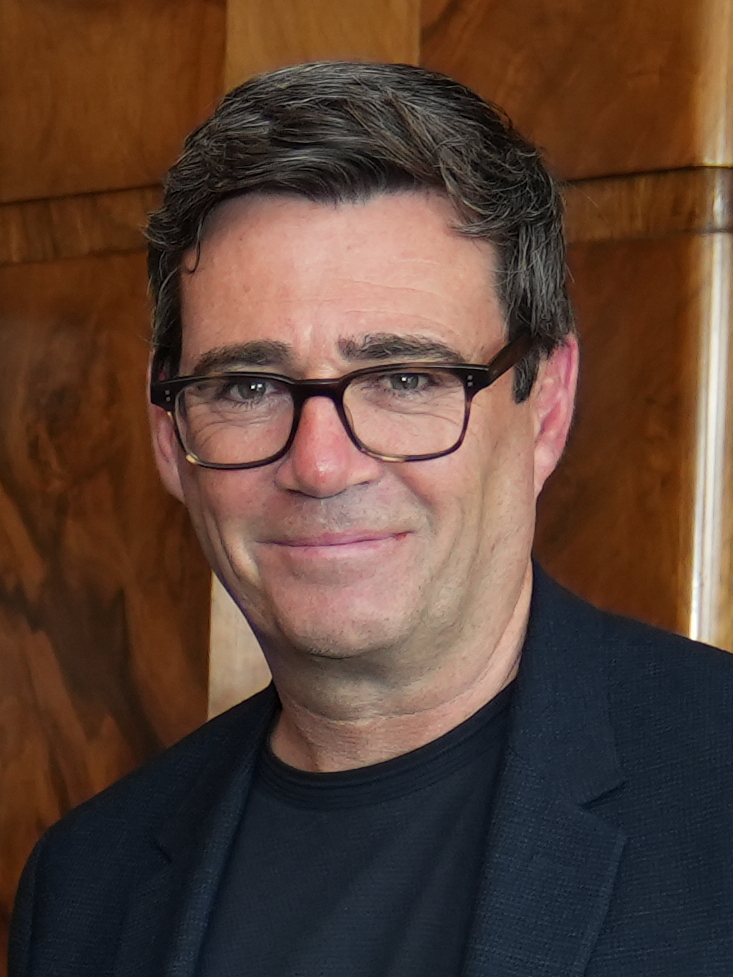
Featured Image: Burnham in 2024, by Scottish Government, licensed under CC BY 2.0